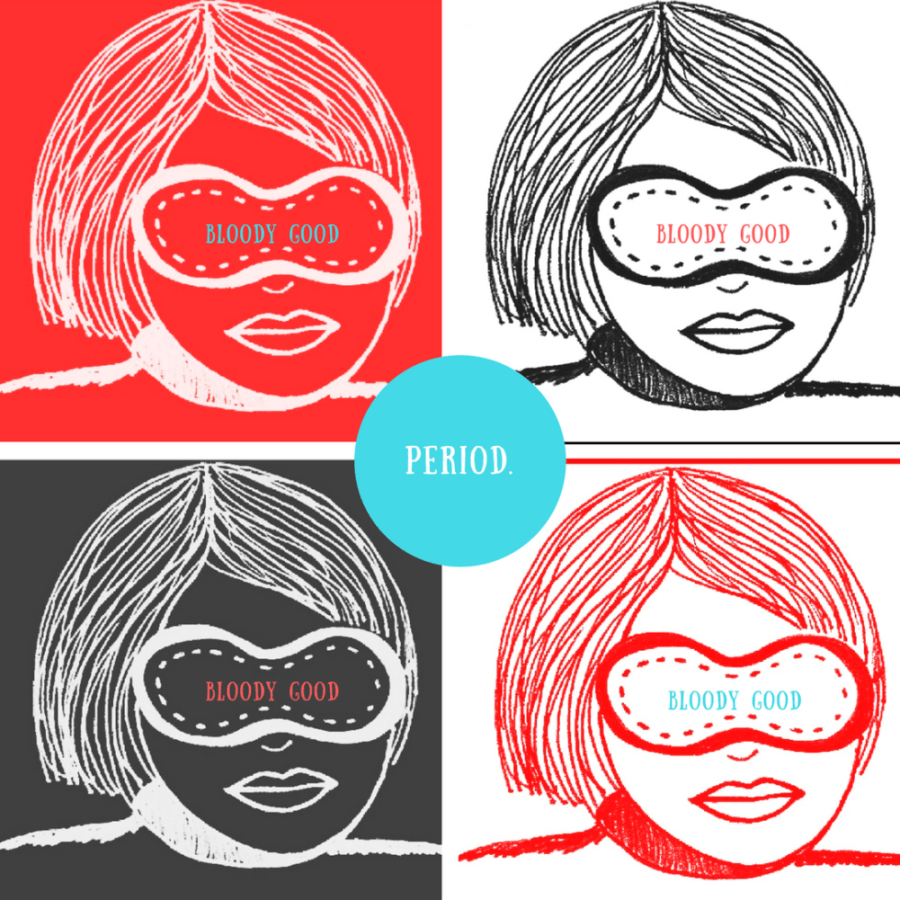
My relationship with my period has always been…complicated.
I will never forget the way kids laughed relentlessly at a friend’s birthday party when I bled through my white shorts at 11. I ran into the bathroom, praying to be sucked into the earth. The humiliation was horrifying.
It wouldn’t be the last time my period came to torment me. Throughout my teenage years and early twenties I suffered intermittent and erratic episodes of heavy hemorrhaging that would disable me completely. Doctors would immediately dismiss me, tell me to lose weight, take Midol, that it was normal. Not knowing any better, I thought it was just my lot in life. Horrific menstrual pain was something everyone on my mother’s side famously endured. I saw other classmates and coworkers lead productive lives during their cycle. And I, the endlessly busy overachiever, didn’t have time for pain. So I just sucked it up.
It wasn’t until the pain hindered me from performing basic tasks and even consuming food and water that doctors started taking me seriously. I was thrown around from physician to physician. Although I had been diagnosed with Polycystic Ovarian Syndrome, my gynecologist at the time didn’t do much but hand me birth control pills. She didn’t believe me when I told her that these pills were making me feel worse, not better. Thereafter, I went to a multitude of gynecologists, one of which claimed I was too young to be so sick and told me I should see a psychiatrist. Because the pain was apparently all in my head. When I got the all clear from a psychiatrist (i.e: I was NOT making this pain up) I decided to pay a visit to my former gyno and let her know she was wrong.
By this point, I looked like I was nine months pregnant (and I was most certainly not) and could barely walk. I had to quit my job and cancel other obligations because I could no longer work. I was in and out of the ER, but no one could give me definitive answers as to what was causing this horrendous pain. In a matter of months, I went from a bubbly, outgoing 25-year-old to a fatigued, incapacitated, and exhausted woman. All kinds of tests were conducted, even ones to detect cancer. It wasn’t until my phenomenal gastroenterologist suggested it could be something called Endometriosis, that I finally started getting some answers.
I soon learned that the debilitating fatigue, inexplicable weight gain, sudden food allergies, and excruciating pain were classic symptoms of this crippling condition. Endometriosis is a disease in which endometrial-like tissue is found outside of the uterus, such as the fallopian tubes, ovaries, liver, intestines, and bladder. These lesions cause severe cramps, painful sexual activity, heavy periods, and pelvic inflammation. It is linked to infertility and can lead to other conditions, such as ovarian cysts, interstitial cystitis, adenomyosis and fibroids.
All those years of suffering and gruesome months of indescribable pain- and proper medical care only came about after a kindhearted, compassionate gastroenterologist listened to me. It wasn’t until he referred me to a specialist that I finally felt some sort of relief in knowing I wasn’t crazy. There was a name for what I had, and even though there’s no cure to date, this incapacitating illness was not all in my head.
For a disease that affects nearly 1 out of 10 women worldwide, it seems pretty mind boggling that awareness is JUST coming around culturally. It is an illness that silently kills our energy, joy, and function and yet diagnoses can take up to 11 years to nail down because it’s an invisible disease. Startling statistics like this show the blatant disregard our bodies endure in cultures worldwide. Until we eradicate the stigma around our bodies, our periods, our pain, and our legitimate battles with our cycles, we will not get the comprehensive health care and support needed to continue successfully. We must knock down the elusive period myth that hovers over our periods – our pain is legitimate and very, very real.
More importantly, our voices in our communities often go unnoticed due to a multitude of factors- one chiefly being that our pain is often dismissed, minimized, and derided because interest in women’s wellness has never been at the forefront of our society. Thankfully, in the ten years since that first flare up (soon to be followed by years of horrific episodes, a miscarriage and two deep laparoscopic surgeries that have out me in remission) awareness has increased substantially and the bleeding community has been more vocal on this front.
We are taught to withhold and contain our suffering because it’s not a valid kind of pain. It took me many years to get the courage to speak openly about my own struggle. As a writer and activist, I wanted to bring transparency on this disease and speak candidly about this misunderstood subject. Earlier this year, in the midst of a flare up and laparoscopic surgery, I published a book of poetry that maps the journey I endured to get to where I am today. My goal is to impart what I experienced in the hopes that someone else may read my struggle and seek help for their pain. If I had known in my teenage years what I now know, I would have sought medical help much earlier on in life.
My fellow menstruators: Agonizing pain is not normal. Hemorrhaging, killer cramps and severe pelvic pain are not okay. Follow your instincts and fight until someone listens. Fight for your body, fight for the right to be heard and listened to. We all deserve access to quality healthcare. We all deserve access to resources and supplies that improve the quality of our lives. We all deserve the right to a healthy and equitable life. It’s our fight to take on considering our current global situation. We are all fighting together. You are not alone.
This piece was originally published in The Bloody Good Period Blog in 2017.
 L Torres
Leave a comment